
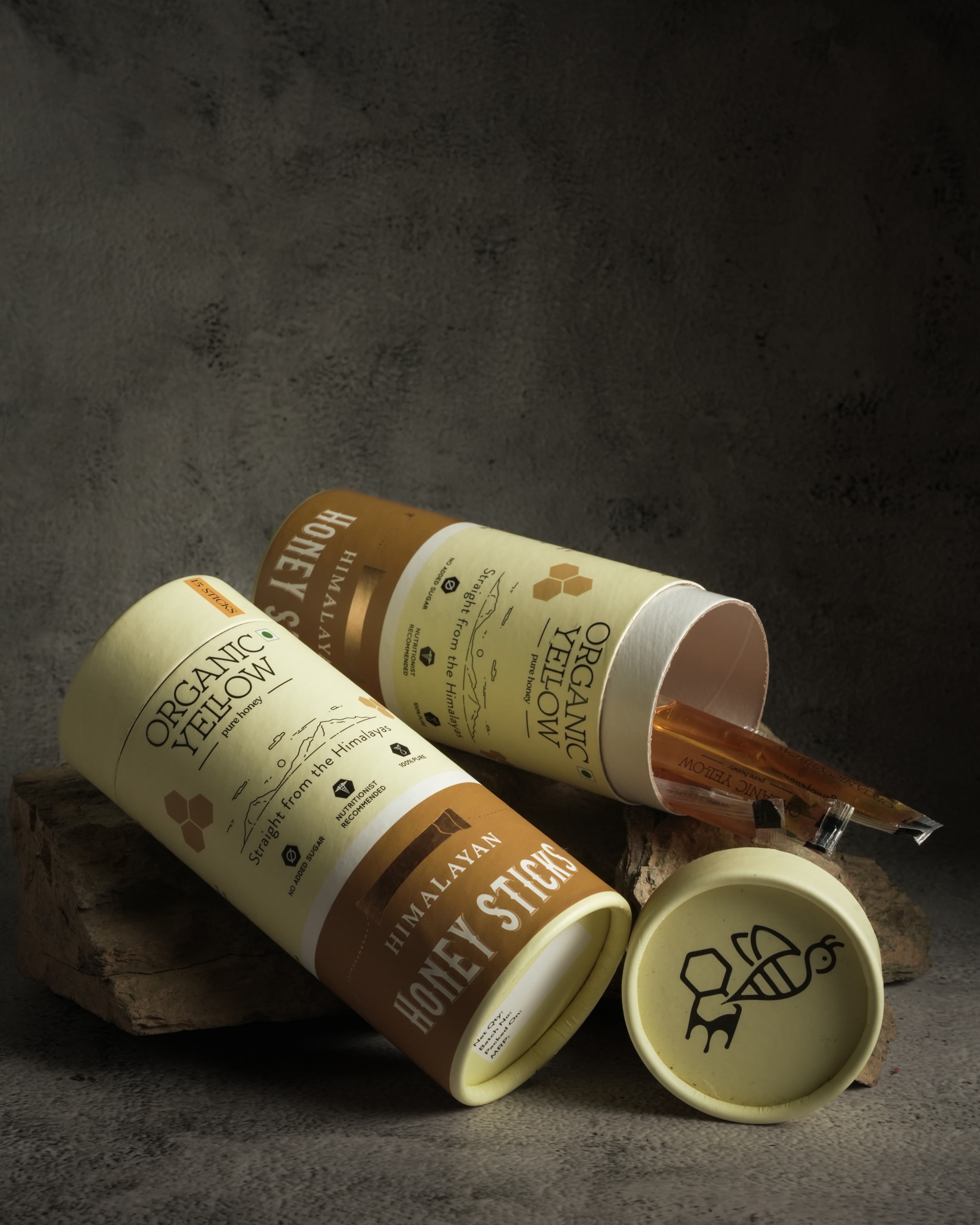
Every jar of Organic Yellow honey starts in a mountain village in Kumaon. Here's what that actually means — and why the altitude matters.
The hills of Kumaon, in the Indian Himalayan state of Uttarakhand, sit between 4,000 and 6,000 feet above sea level. The air is clean, the flora is dense and largely unsprayed, and the nearest large-scale agricultural operation is usually several mountain ridges away.
This is where Organic Yellow honey comes from. Not as a marketing concept, but as a supply chain fact.
What is an SHG?
A Self-Help Group (SHG) is a small collective — typically 10 to 20 women — that pools savings, provides microloans to members, and builds economic resilience at the village level. The SHG model was formalized in India in the early 1990s and has since become one of the most effective rural poverty-reduction tools in the country. Today, over 12 million SHGs operate across India.
Beekeeping is a natural fit for SHG income generation in mountain communities. It requires relatively low capital investment compared to farming, doesn't need large land holdings, and can be managed around existing household and agricultural work schedules.
The economics of high-altitude beekeeping
Mountain honey commands a price premium for good reason. At higher altitudes:
- Bee populations are smaller and more isolated — which means less risk of disease transmission and lower antibiotic pressure
- The flora is more diverse — Himalayan bees forage on rhododendron, buckwheat, wild herbs, and dozens of wildflower varieties, producing a more complex, multi-floral honey
- Agricultural chemical exposure is lower — the distance from large-scale farming operations reduces pesticide residue risk significantly
The challenge is the same thing that makes it valuable: remoteness. Getting honey from a mountain village to a cold-fill facility without compromising it requires reliable collection, correct storage from the point of harvest, and a supply chain that doesn't introduce unnecessary heat or handling steps.
How Organic Yellow works with the SHGs
We source directly from 1840 women beekeepers across two SHG clusters in Kumaon — bypassing the middlemen who typically extract most of the margin in rural honey supply chains.
The price we pay is above market rate. This isn't charity — it's how we ensure the quality and supply consistency we need. Beekeepers who are paid fairly have an incentive to maintain hive health, harvest at the right time, and store correctly. Beekeepers who are squeezed have an incentive to cut corners.
The relationship is built on a few principles:
- Transparent pricing — beekeepers know exactly what we pay and why
- Technical support — we work with an apiculture specialist to help SHG members improve hive management and honey quality
- Consistent purchase commitment — we commit to buying a minimum volume per season, which reduces the income uncertainty that pushes rural producers toward lower-quality mass buyers
From hive to stick
The journey from 6,000 feet to your hands looks roughly like this:
1. Bees forage on Himalayan flora through the main nectar flow (spring and autumn) 2. Honey is harvested by hand at the appropriate moisture content (below 20% water, which is critical for shelf stability) 3. Raw honey is transported in sealed containers to our cold-fill facility — no heat, no exposure 4. Each batch is tested at NABL-accredited labs across 8 parameters before it enters production 5. Honey is filled into sticks or jars at ambient temperature and sealed
The result is a 98/100 purity score, consistently maintained across batches.
Why this matters beyond the jar
When you buy from a brand that publishes its lab reports, pays fair prices to identifiable producers, and keeps its supply chain short and transparent — you're not just buying honey. You're part of the economic case that high-quality, ethically sourced food can work as a business.
1840 women. 200 hives. One supply chain we're genuinely proud of.