
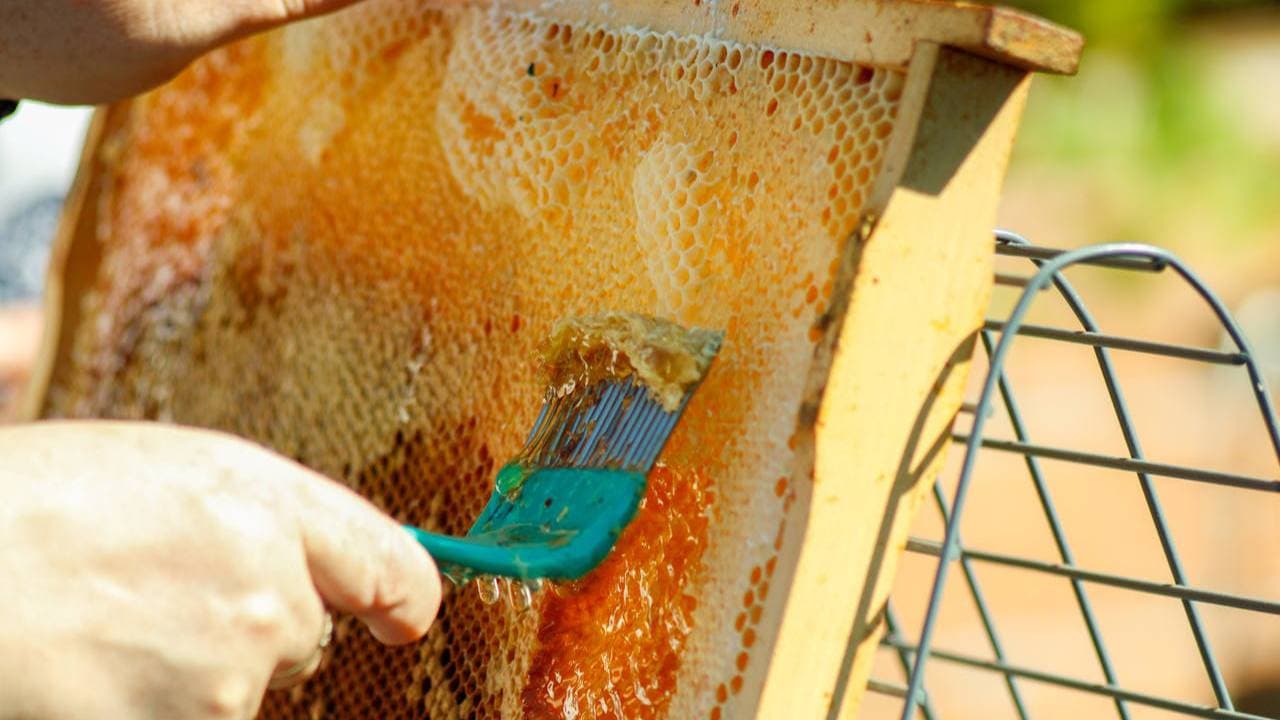
Most supermarket honey has been heated, filtered, and stripped of the very things that make honey worth eating. Here's what's lost — and why it matters.
Walk into any supermarket and you'll find shelves of honey that looks identical — clear, golden, perfectly liquid. That clarity is not natural. It's the result of a processing pipeline that most brands would rather not explain.
What happens during honey processing?
Commercial honey is typically heated to 60–70°C (sometimes higher) and pushed through ultra-fine filters to remove pollen, air bubbles, and anything that might cause the honey to crystallize on a shelf.
The goal is a product that looks pristine, pours smoothly, and stays liquid for a long time. The trade-off is significant.
What heat destroys
Honey contains a complex ecosystem of beneficial compounds that are sensitive to temperature:
- Diastase and invertase — naturally occurring enzymes that aid digestion. Diastase activity (measured by the Diastase Number, or DN) is used internationally as a proxy for honey freshness and processing. FSSAI standards require a DN of at least 3. Heavily processed honey often scrapes just above that floor.
- Antioxidants — flavonoids and phenolic compounds that give honey its anti-inflammatory properties are measurably reduced after pasteurization.
- Pollen — often called an "impurity" by processors, pollen is actually how scientists trace honey to its botanical and geographic origin. Removing pollen makes it impossible to verify where honey came from.
- Hydrogen peroxide — produced naturally by the enzyme glucose oxidase, this is part of what gives raw honey its antimicrobial properties. Heat reduces enzyme activity, which reduces this effect.
How to spot raw honey
Raw honey looks different because it is different. Genuine unprocessed honey:
- Crystallizes — this is a sign of real honey, not a defect. The glucose in honey naturally crystallizes over weeks to months. If your honey has never crystallized after 6 months, ask why.
- Is opaque or cloudy — the fine pollen and micro-air bubbles haven't been filtered out.
- Has a more complex flavour — floral, sometimes slightly tangy, with depth. Processed honey often tastes one-dimensionally sweet.
- May have a layer of foam — especially after jarring. This is natural.
What "NABL certified" actually tells you
NABL accreditation means the testing lab meets international quality standards — not that every brand using the phrase has passed meaningful tests. What matters is which parameters were tested.
Organic Yellow tests every batch across 8 parameters at NABL-accredited labs, including NMR-based C4 sugar detection (the gold standard for adulteration testing) and Diastase Number verification. Our full purity score is 98/100. Lab certificates are available on request — not buried in fine print.
Our process: cold-fill, no pasteurization
Organic Yellow honey goes from hive to jar with minimal intervention. There is no pasteurization step. We cold-fill at ambient temperature to preserve enzyme activity, pollen, and antioxidant content. The honey is filtered only coarsely — enough to remove wax and debris, not fine enough to strip pollen.
The result is honey that crystallizes, smells strongly of the Himalayan flora the bees fed on, and has the enzyme activity numbers to back up every claim.
If your honey is crystal-clear and has been liquid for two years, it's been processed. That's not inherently dangerous — but it's not what honey is when it comes out of a hive.