
Honey has been used as a skincare ingredient for thousands of years. The science holds up — but only if you're using the right kind.
Ancient Egyptian medical texts recommended honey for wound dressing. Ayurveda classifies it as a primary healing agent. And somewhere between 2025 and a Sunday morning, a lot of people started rubbing it on their faces.
So: does it actually work? The short answer is yes — but with some important caveats.
Why honey works on skin (the science)
Honey has three properties that make it genuinely useful as a topical ingredient:
1. Antibacterial activity Raw honey produces hydrogen peroxide via the enzyme glucose oxidase — a slow, controlled release that's antimicrobial without being harsh. Certain honey varieties also contain methylglyoxal (MGO), a compound with strong antibacterial properties against acne-causing bacteria like P. acnes. This is why raw honey is sometimes used as a spot treatment.
2. Humectancy Honey is hygroscopic — it draws moisture from the air and binds it to the skin. This makes it a natural humectant, similar in function to hyaluronic acid, though less potent. A honey mask leaves skin feeling softer primarily because of this water-binding effect.
3. Wound healing and soothing The anti-inflammatory compounds in honey — including caffeic acid and various flavonoids — can reduce redness. Historically, medical-grade honey (Manuka, primarily) has been used in clinical wound management. Consumer applications are less dramatic, but the soothing effect on irritated skin is real.
Practical uses that actually work
- Simple face mask — apply a thin layer of raw honey to clean, damp skin. Leave for 15–20 minutes. The dampness matters: it helps the honey spread and activates the humectant effect. Rinse with warm water.
- Spot treatment — a small amount of raw honey applied directly to a blemish overnight. The antibacterial action is gentle enough for daily use on active spots.
- Lip scrub — mix raw honey with a pinch of sugar. The sugar provides physical exfoliation; the honey soothes and softens simultaneously. Better than most commercial options.
The "raw vs. processed" difference matters here too
This is worth saying clearly: processed honey — the clear, heated, pollen-stripped variety — has reduced enzyme activity. The glucose oxidase that produces hydrogen peroxide is partially denatured by heat. For skincare applications, where the antibacterial and antioxidant properties are the entire point, you want raw honey.
A note on patch testing
Honey is generally well-tolerated, but it's not hypoallergenic. People with bee or pollen allergies should be cautious. Do a patch test on your inner arm before applying to your face — leave for 30 minutes, check for redness or irritation.
Also: if you use retinoids or active exfoliants at night, don't layer honey on top. Keep it simple.
The Organic Yellow angle
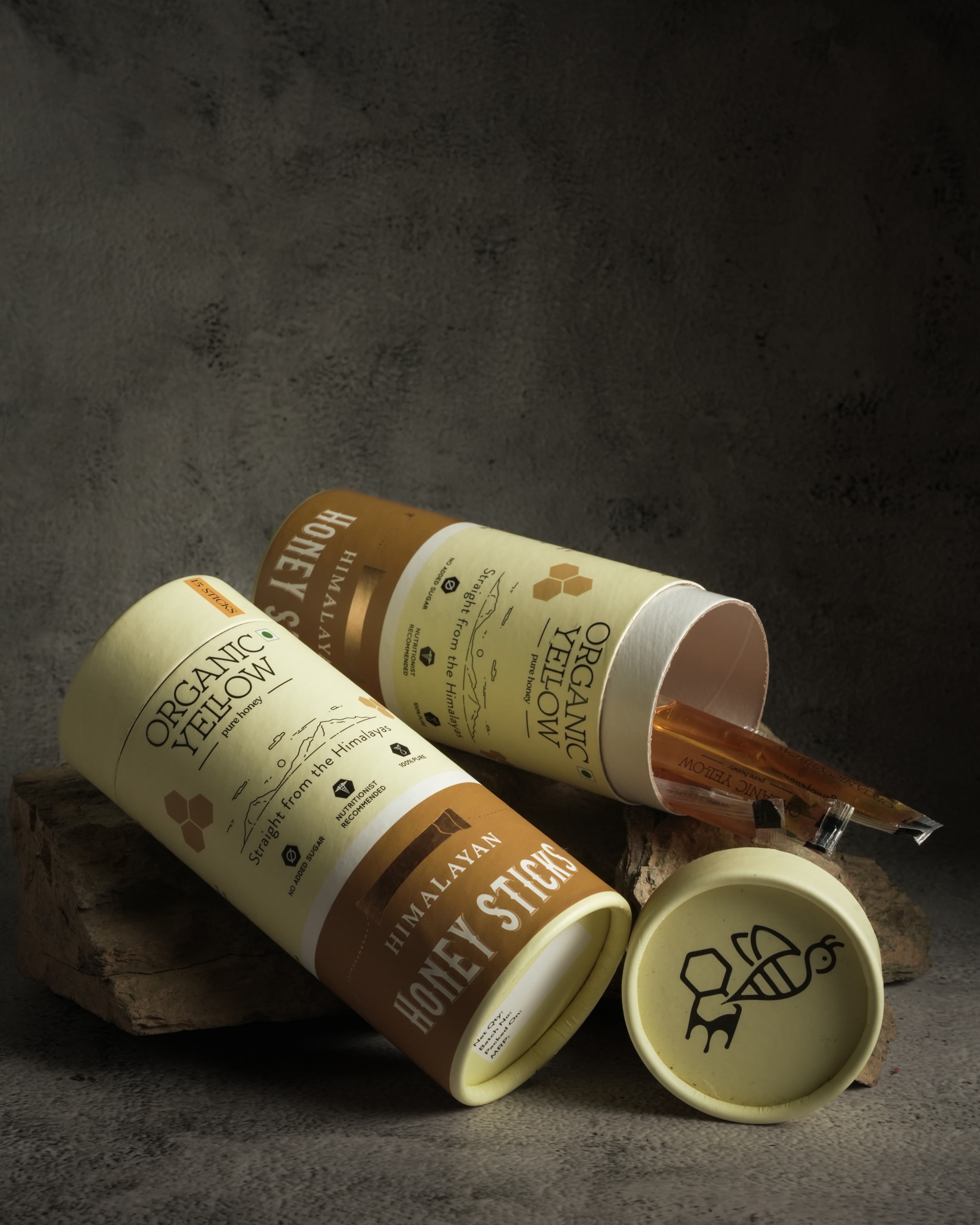
Our raw honey sticks are a convenient single-serve format — each 8g stick is exactly the right amount for a face mask or spot treatment without opening a full jar. Because the honey is cold-filled and unprocessed, the enzyme activity is intact.
Pure input, real output. That's the entire pitch.